Case GOBO Transport & Logistics
From 3 minutes to 30 seconds per transport order
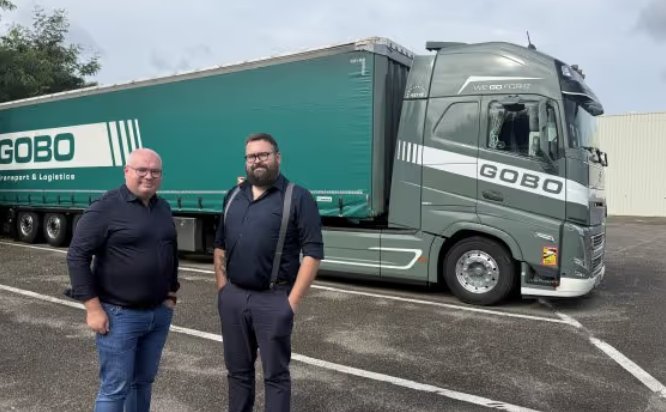
Foto: Hyperfox
Transport company GOBO Transport & Logistics focuses on innovation and technology,based on the observation that there is still a lot of manual processing in the sector. Evenwhen orders are received by email, there is a margin of error with a significant impact oncosts. An incorrect date or a shipment that is not clearly shown in the schedule are just afew examples. With Hyperfox, GOBO Transport & Logistics aims to accelerate andoptimise this flow of information.
Context
GOBO Transport & Logistics is a family business now run by the third generation, whilethe fourth generation is already preparing to take over transport planning. What beganwhen Jules Gobyn arrived in Lanaken from West Flanders in 1963 has grown into a solidinternational group. Growth has accelerated in recent years, mainly through acquisitions.
In 2005, Wijsen Logistics joined the group in the Netherlands, adding a branch inMaastricht and a significant increase in turnover. In 2023, Cargofoor, known for tanktransport to the Balkans, was next. The group now has branches in Germany, Slovakia and Romania.
Within GOBO Transport, there was still a lot of manual processing, especially for ordersreceived by email. These margins of error can lead to incorrect data, orders or addresses,resulting in transports not appearing correctly in the schedule. This is something theywant to avoid at all costs. The back office is not responsible for rectifying problems, but itdoes perform an indispensable job and therefore deserves strong support. The objectivewas therefore to make their work more valuable. It remains repetitive work, butprocessing an order should become more pleasant and efficient. With this ambition inmind, GOBO Transport & Logistics and Hyperfox entered into discussions.
Challenges (before Hyperfox)
- Manual processing.
Two employees worked full-time on manual order entry – for bothtanker transports and curtain-sided lorries – and raced against the clock every day toprocess all the information correctly and on time.
- Mix of channels.
Orders came into the back office through various channels: a mix ofemails, often with attachments such as PDFs, CSV files or Excel documents,supplemented by orders via marketplaces such as Transporeon. This sometimes madeit difficult to maintain an overview.
- External connections.
The connection with Sinari's TAS TMS did not always runsmoothly.
Solution (the Hyperfox approach)
- Automatic import.
All incoming orders were centralised in Hyperfox. Email orders arenow automatically imported, processed and converted into processable orders. Onlyvalidation is still required.
- Automatic forwarding.
Following full integration with the TAS TMS, orders areautomatically forwarded from Hyperfox. As a result, only one employee now works onorder processing; the other colleague now supports transport planning.
- New unit, same organisation.
A new transport unit (refrigerated) was seamlesslyimplemented into the organisation, without any additional recruitment.
GOBO is now truly an IT company on wheels!
The impact
The decision to choose Hyperfox was based on shared values: people are important andcustomer focus is the priority. At the same time, standardisation is pursued whereverpossible. "People, technology and processes go hand in hand," says Frank.
An additional opportunity was the positive message to employees: "We are not replacingyou. People with strong qualities can take on more and more valuable tasks. Together, wecan start thinking more commercially." The faster availability of information via Hyperfoxalso forms a solid basis for better communication. That makes this story a real win-win.
Learning experience
The most important lesson learned from this process is that automation is not a threat,but a powerful lever: digitising repetitive processes creates space for more valuable work,better service and greater commercial focus. When people, processes and technologycome together in a smart way, not only does the organisation become more efficient, butemployees are also empowered. Ultimately, this case proves that digital transformation isonly truly successful when not only the company grows, but also the job satisfaction ofthe people who drive it.